
About MG Motor NepalA century of British spirit,
still turning heads.
Cecil Kimber built the first MG in Oxford in 1924. A century on, the badge still carries the same intent: design that matters, performance that’s honest.
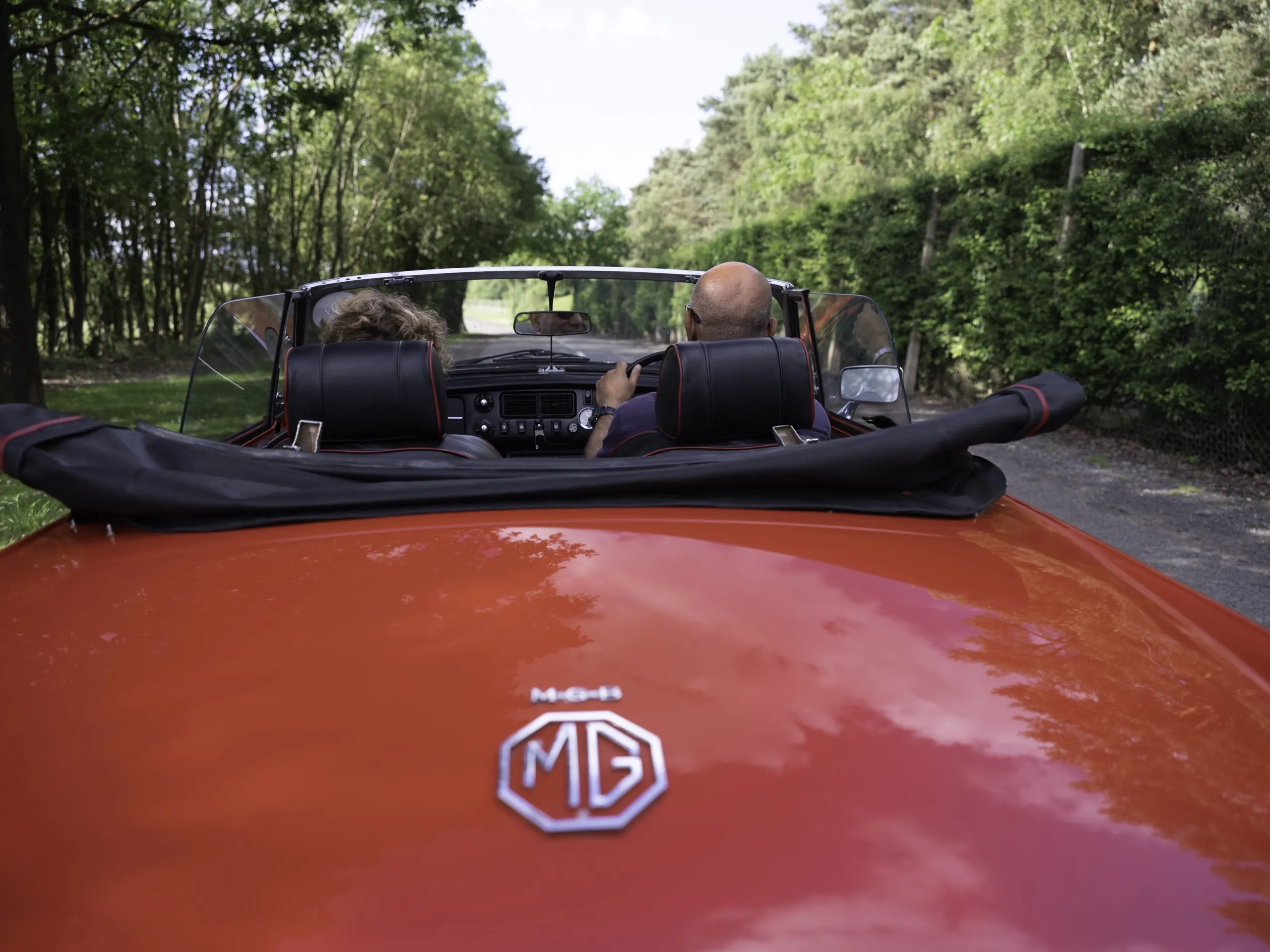
1967 MGB Roadster: Abingdon-on-Thames
The octagon story
From Oxford’s Morris Garages to Nepal’s Himalayas: one badge, one obsession.
The name started as a bookkeeping shortcut. Cecil Kimber ran the Morris Garages dealership in Oxford, and when he began selling tuned and rebodied Morris cars in 1924 he stamped them with the initials of the garage: M·G. What started as an abbreviation became a movement.
By the 1930s MGs were setting land-speed records at Montlhéry. By the 1960s the MGB had become the best-selling British sports car in history. The factory at Abingdon-on-Thames, a single red-brick block on the Thames, produced over a million cars before the gates closed in 1980.
In 2007 SAIC Motor acquired the marque and restarted production. What followed was a second act few expected: MG4, Cyberster, Windsor, cars that treat electric not as a compromise but as a canvas. The octagon is back, and this time it’s silent on the move.
Milestones
A hundred years, eight moments.
Click any year to jump through the decades.
1924
Chapter 01Oxford, England
Cecil Kimber, general manager of Morris Garages in Oxford, bolts an elegant two-seater body to a Morris chassis and calls it the MG Chummy. The octagon badge is born.
1930
Chapter 02Abingdon move
MG outgrows Oxford and relocates production to Abingdon-on-Thames. Over the next 50 years the factory will build more than a million sports cars: a figure few British marques come close to.
1931
Chapter 03Record breaker
George Eyston drives the tiny MG EX120 past 100 mph at Montlhéry: the first 750cc car in history to do so. MG becomes the land-speed specialist of the 1930s.
1955
Chapter 04MGA
The MGA ushers in the modern era of MG sports cars. Its flowing lines: drawn by Syd Enever: influence a generation of European roadsters and set the template for the iconic MGB that follows.
1962
Chapter 05MGB
The MGB launches and becomes the definitive British sports car of its decade, sold 500,000+ times. More than sixty years on, the MGB roadster remains one of the most collected classic cars in the world.
2007
Chapter 06A new chapter
SAIC Motor acquires the MG marque and restarts volume production, combining British design heritage with Chinese manufacturing scale. MG begins its global resurgence.
2020
Chapter 07Electric revolution
MG pivots aggressively to EVs. The ZS EV, MG4, Cyberster and Windsor rewrite expectations for accessible electric motoring across Europe, Australia, and Asia.
2026
Chapter 08MG in Nepal
GO Automobiles brings the full MG range: Comet, Windsor, Hector, and the flagship Majestor: to the Himalayan market. The octagon badge, still carrying a century of British spirit, finally reaches Nepali roads.
What MG stands for
Three things, for a hundred years, unchanged.
Design courage
From the MGB's pin-sharp fender line to the Cyberster's scissor doors, MG has never copied the room: it has always drawn its own silhouette and trusted the world to follow.
Everyday performance
Sports-car genes in every trim. A Hector isn't just an SUV, it's a Hector. A Comet isn't just a city car: it's the most manoeuvrable 4-seater on the road, born of the same Abingdon instinct.
Accessible innovation
MG was the first mainstream marque to democratise a sub-100 mph 750cc back in 1931. Today it's doing the same with EVs: bringing 350 km of real-world range to a price point others said was impossible.
MG in Nepal